Driving is becoming a necessity. Today, walking without a driving licence is like travelling without a national id. It gives that feeling that something important is lacking. If you learned to drive at 15, count yourself lucky, in developing countries like mine, learning how to drive at 30 is a normal thing.
Well, if you are one of those learning to drive in their late twenties or thirties, you might want to learn quickly, get a driving license and hit the road as fast as possible. With that much, lets look at our first and most important tips.
1. Be confident
Driving is more psychological than technical and if you were to ask any skilled driver, they will tell you that.
Understand that you are the one in control. It doesn’t Matter how big the car is, whether its a range rover, a bus, or a lorry. The car will only do what you tell it to do. If you step on the accelerator the car will speed up and hit whatever blocks its way. If you step on the brake pedal, the car will stop.
View the car as an extension of your self, if you were running and happened to find a log blocking your way you will stop. You will not panic, because you are in control of yourself.
So, the first thing you should do when you get into that car is to relax and let your mind do the job.
2. Safety comes first
While learning to drive, your instructor or other drivers on the road might pressure you to overtake, cross the road or clear the way. If it doesn’t feel safe, don’t do it. Ofcourse they will make noise and insult you of your poor driving skills but its better than to cause an accident.
For safety’s sake, be a little bit stubborn until you are sure of what you are supposed to do.
3. Have fun
Driving is enjoyable. The fact that its a practical thing makes it far from boring. So, be positive through the whole process.
Driving Basics
With the above 3 tips lets look at some basics of driving. We will start with a manual car then go to an automatic one.
A) How to drive a Manual vehicle
A manual car has three pedals, the clutch, brake and accelerator. Then there is the manual gear which has five levels also known as gears. That does not include the reverse gear and the parking. So, we can say a normal manual car has six gears excluding only the parking because at this level no gear is engaged.
The purpose of the clutch pedal is to disengage power transmission from the engine to the wheels. This means the engine will be on and running but it will not be connected to the wheels. Its what they call idling. When you release the clutch, it will connect the rotating shaft to the wheel’s differential so it can rotate them too. At this point, if you don’t step on the brakes, the car will start moving if any gear is engaged. The brake is to stop the car while the accelerator is to speed up the car.
The manual gear
Remember the six gears we mentioned? These are the ones that determine how fast and strong the car moves. The gears are set as indicated in the image below
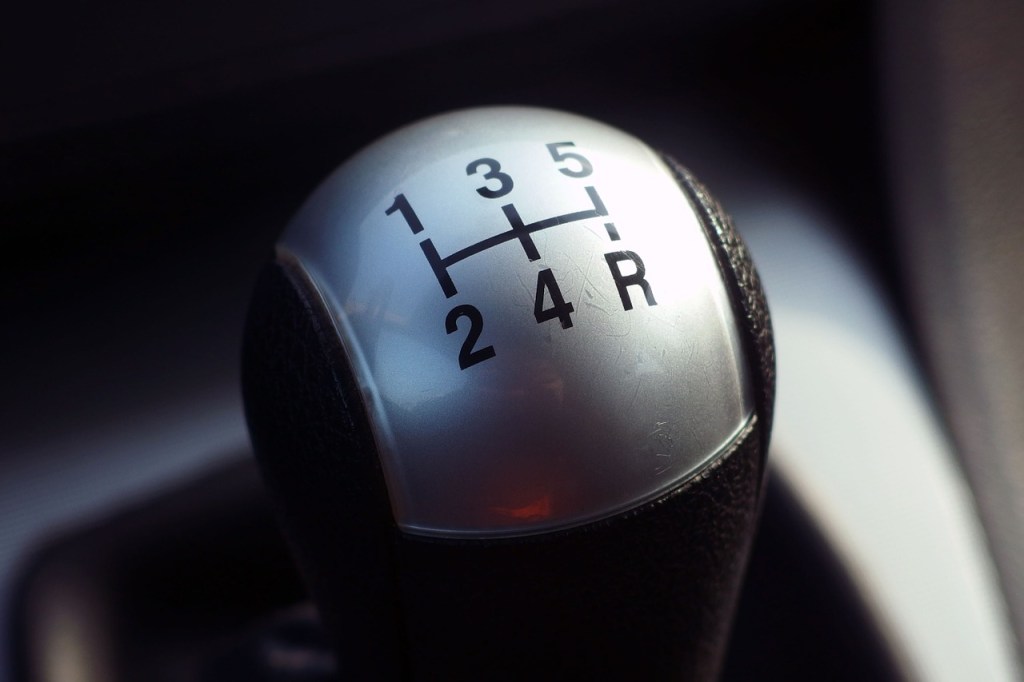
The neutral or in the layman’s language free gear, is usually at the middle or center of the other gears. Its also the parking in manual cars. Gear 1 on the top left corner, 2 on the down left, 3 on the top center, 4 on the down center, 5 on the top right corner and reverse on the furthest down right corner.
Gear one is the slowest but stronger than the other four. Only reverse is stronger than gear 1. Gear one is engaged while starting an idle car or when climbing a hill. 2 and 3 are faster but are mostly used on off-road and less steep areas. 4 and five are the fastest but weakest. They are engaged on tarmac, flat areas and when the car is already in motion.
The handbrake
The handbrake is an alternative to the pedal brake but this one is not used on emergency i.e. while on the road. Its only used on parking and sometimes by skilled drivers while drifting on sharp corners. Just pull it up to hold the car but press the button on it and push it down when you want to release the car. I.e when starting the engine.
Steering wheel
The steering is the easiest part. It works just as it seems. Just steer it to the direction you want the car to go. Once you hold it, the rest will flow. Just remember to be gentle on it when the car is on high speed.
Practise when the engine is off
When the car is off, learn how to use the pedals and to engage all the gears. Get familiar to them on the first day then on the second day, start the car’s engine.
Starting the car
Before you ignite the car, step on the clutch. Its a safety measure. Why? Imagine that gear 1 is already engaged in the car. The car will shoot and knock down everything ahead of it. If its a wall, it will crash it! By stepping on the clutch you are disengaging the engine so it can run without spinning the wheels
Caution!
Make sure to step on the clutch before engaging any gear. And when you do, don’t be quick to release the clutch pedal. Instead, release it slowly and gently to avoid damaging the clutch. Make it a habit. With time, you will get used to it.
Also, make sure where you are practising is a field or free area without nearby objects you can hit. Let there be an experienced driver or instructor to guide you.
The ignition
Some ignitions use a button while most use a key. The area is marked with check, on and start. Still stepping on the clutch, Rotate the key to start and when the engine starts, release the key.
Don’t let go of the clutch until you have chosen the gear to engage. Try the gear to make sure you have mastered it. Then engage gear 1 to move forward or reverse to move backwards. Then step on the brakes with the other foot and lower the handbrake. Look at your side mirrors to make sure the way is clear then release both the pedals slowly. The car will start moving. Now you can play with the pedals to control the car. Step on the clutch to disengage the engine then the brake to stop it.
Hill start
Starting a manual car on a hill or any steep area is the same as starting it on any other flat ground but it can be a little bit challenging. One, because the car needs a lot of power and two because the car might go down the hill once you release the handbrake.
First things first, step on the brakes pedal before pushing down the handbrake, then step on the clutch with the left foot, start the engine and engage gear number 1. Once the car starts picking, like it wants to move forward, help it by stepping the accelerator to give it some power. That should be good to go. If you do it wrong, the car will switch off automatically and you will have to repeat the process.
On tarmac
The lowest gear you can use on tarmac or any smooth and flat road is number three, else you will feel like the car is not moving at all. Number 4 or Five will do best. Remember this two are fast but weak gears so make sure the vehicle is in good motion before engaging them. If not give it motion by stepping on the accelerator.
Key points
- Step on clutch before starting the engine
- Be slow while releasing the clutch pedal
- Make sure to use the clutch before shifting to any gear.
- Remember to shift to gear 1 on hilly areas and steep roads
Parking a manual car
To park a manual vehicle, first step on the clutch then the brakes to stop. Still stepping on this two pedals, shift the gear to neutral/parking, that is, simply move the gear stick to the center. At this point the gear feels kind of loose and at ease if you try to move the handle. Now pull the handbrake and release the brakes and clutch pedal gently. Switch off the engine and the car is parked.
B) Automatic vehicle
An automatic vehicle has two pedals, brake and accelerator. Then it has an automatic gear which explains why its called an automatic vehicle. The difference with the manual is, the automatic one accelerates automatically. In simpler words, the gears shifts themselves so the driver doesn’t have to keep changing them. The only time the driver will touch the gear is when he/she intends to park, reverse or set to drive.
The automatic gear
The gear section of an automatic car is marked with P, R, N and D. That is parking, reverse, neutral and drive. Normally the gear is set to P while parking. R when reversing and D when driving.
Neutral, works like the clutch as in manual cars. For safety, neutral takes away power from the wheels. That means the wheels are simply rolling but have no power. N is used when the car brakes fail or when the accelerator malfunctions.
Starting an automatic vehicle
Just like we have a clutch in a manual car, an automatic one uses the brakes for safety. This means the car won’t start if you don’t step on the brakes. It will also not start unless the gear is set to parking.
Starting the engine
Most automatic models are modern, which means you are likely to use a button instead of a key to start the engine. Unlike key ignitions which are marked with check, on and start, buttons use indicators ( some coloured lights on the button). Orange is for on and green is for start.
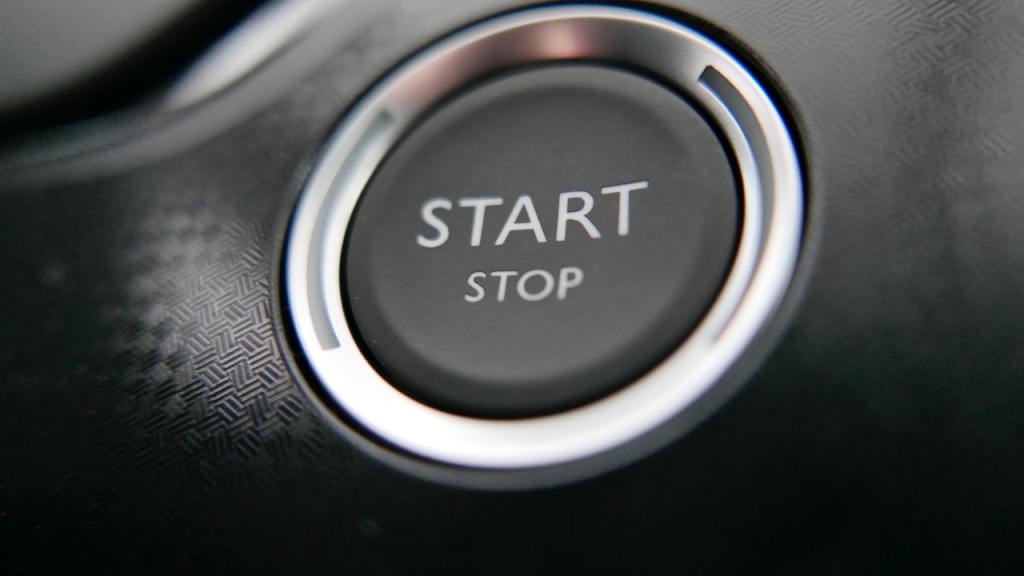
First things first, step on the brakes and makes sure the gear is set to parking. Then press the button or rotate the key to start. The engine will start.
Still stepping on the brakes, set the gear to drive if you want to move forward or reverse if you if you want to move backwards then push down the handbrake and Check to makes sure the way is clear. Release the brakes pedal and the car will start moving.
Driving the vehicle
If you want the car to go faster, step on the accelerator. Do the same on hilly areas.
Caution!
The accelerator may not respond immediately, not that the pedal has a problem or anything like that. Most vehicles are made that way for safety purposes. So, step and hold for a few seconds and when it picks speed, be keen to step on the brakes incase you need to stop.
Parking
First, to stop the car you need to step on the brakes, shift the gear to parking then pull the handbrake. Now the car is parked, switch it off and close the doors.
Final tips
- Make it a habit to check the mirrors before driving to make sure the way is clear.
- Always keep left (or the legal side in your country) while driving even on off-road.
- Make it a habit to use indicators while taking corners.
- Take longer U turns while taking sharp corners
- Make sure to read road signs
- Avoid over speeding
- Practise often to better your skills
Key points
- A car is an extension of yourself, just like you look right and left before crossing the road, take the same measures while driving.
- Safety comes first. Put on your sit belt and while on the road, don’t go until you are sure it is safe.
- Confidence is important. Relax be positive and gentle on the steering. It will help you gain more control of the car and quicken the learning.
- Don’t panic, the car will only do what you instruct it to do. Just relax, make sure you are doing it right and you are set to go.
Happy driving!
 Notionet
Leave a comment